
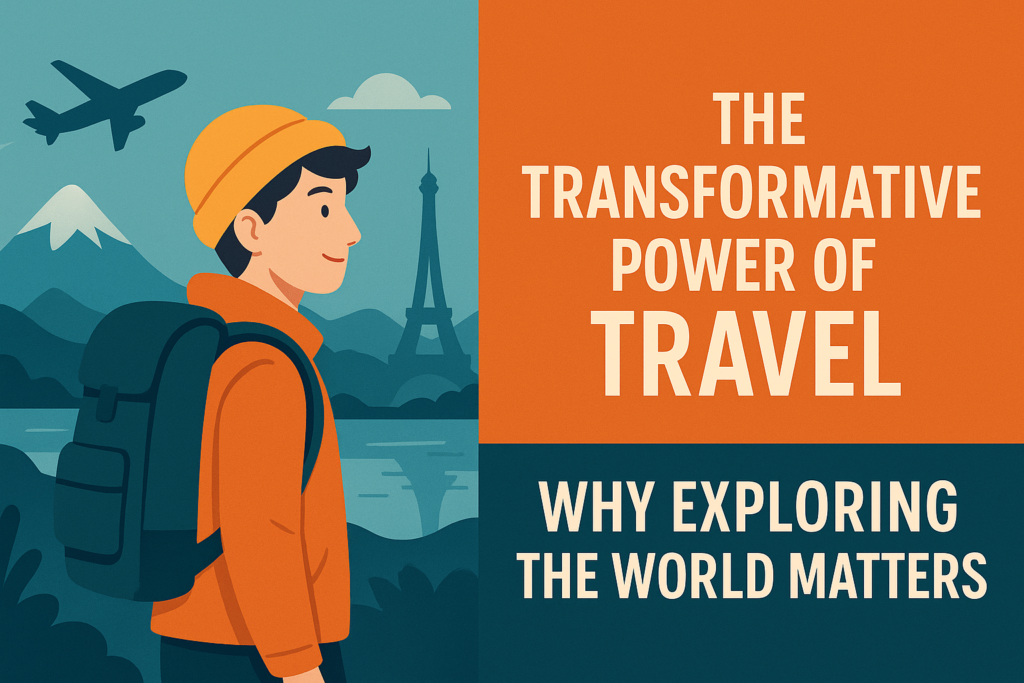
Last year, a woman named Maya boarded a last-minute flight to Tokyo with nothing but a backpack and a restless heart. She’d never tasted fresh sushi, heard the electric hum of Shibuya Crossing, or seen cherry blossoms drifting through the air like delicate pink confetti. Yet, something pulled her—an unexplainable yearning for someplace unfamiliar. Did you know that over 70% of travelers admit their most memorable journeys happened in places they knew nothing about beforehand? Why is it that the unknown calls to us so strongly, whispering promises of transformation with every border crossed?
Think back to your first steps onto foreign soil: the airport doors sliding open to reveal a city ablaze with neon lights, the disorienting rush of a language you don’t yet understand, the scent of sweet spices mingling with the wet pavement after a summer rain. Your senses awaken as if for the first time, pulse quickening with anticipation. Every detail—the clatter of distant streetcars, the laughter spilling from hidden cafés, the bold colors of market stalls—becomes a vivid tapestry woven with curiosity and wonder. Uncertainty lingers, but it is not unwelcome; it tingles at the edges of your nerves, inviting you to surrender the illusion of control.
Why does stepping into the unknown ignite something so powerful within us? Perhaps it’s because each act of travel is a gentle rebellion against routine, a leap into possibility. Whether you are watching a sunrise crest over a city skyline you can’t yet pronounce, or sharing a meal with strangers whose stories are yet untold, you become both observer and participant in an unfolding adventure. As Maya wandered the lantern-lit alleys of Tokyo, she realized that the real beauty of travel lay not in knowing, but in discovering. In that moment, the world expanded, and so did she.Travel is often seen through the lens of leisure and escape—an exhilarating break from the routines of day-to-day life. Yet, its significance reaches far beyond the simple pleasure of a holiday. At its core, travel is a gateway to cultural exchange, enabling people to step into lives, traditions, and environments wholly different from their own. It offers the chance to see the world from multiple viewpoints, fostering empathy and a richer understanding of humanity. Moreover, travel is a powerful catalyst for personal growth. When we navigate unfamiliar streets, try new foods, or communicate in a language not our own, we are compelled out of our comfort zones and invited to discover resilience, curiosity, and self-confidence. The sense of adventure and excitement that comes with venturing into the unknown is matched only by the profound effect such experiences have on our perspectives and priorities.
There are countless ways to embrace travel, each with its own essence and rewards. Solo travel, for instance, allows for a deep journey inward, as much as outward, encouraging introspection and self-reliance. Traveling with friends or family offers opportunities for shared discovery, connection, and the creation of unforgettable memories. Cultural travel immerses us in the history, art, and daily life of distant communities, while eco-friendly adventures promote responsible exploration and a deeper relationship with the natural world. Whether trekking across continents or exploring hidden corners of your own city, every form of travel holds unique allure and challenges.
In this article, we’ll delve into the many benefits that travel provides—stretching from expanded worldviews to newfound confidence—as well as the obstacles travelers often encounter, from language barriers to cultural misunderstandings. We’ll also reflect on the lasting impact that venturing away from home can have, not only in shaping who we become, but also in influencing the way we engage with the world long after the journey ends. Travel, in essence, is not just about places visited but experiences lived, lessons learned, and lives transformed.Travel serves as a powerful vehicle for broadening perspectives, offering individuals opportunities to immerse themselves in cultures far removed from their own. When people venture beyond their familiar environments, they not only encounter new traditions, foods, and customs, but they also gain firsthand insight into different belief systems and social norms. For instance, someone raised in a fast-paced urban setting might be surprised by the emphasis on community and slow living in rural villages halfway around the globe. This exposure prompts travelers to re-examine their own assumptions and biases, fostering empathy and adaptability.
Numerous studies have highlighted the transformative effects of travel on personal growth. According to research conducted by the Institute for the International Education of Students, 98% of students who studied abroad reported increased maturity, and 94% claimed that their worldviews became more nuanced upon returning home. These shifts in perspective are not limited to students; even seasoned adults often report new levels of openness after extended stays in foreign environments. Stories abound of travelers who adopted new values or practices after living abroad, such as embracing communal meals after time in Italy or adopting eco-friendly habits inspired by practices in Scandinavia.
Language learning is another critical dimension of this broadened outlook. Immersion in a setting where one’s native language is foreign pushes individuals to adapt rapidly, breaking down communication barriers and fostering cross-cultural understanding. Beyond the practical aspect of mastering a new tongue, this process helps break stereotypes. Misconceptions—like assuming all members of a particular culture act or think a certain way—are dismantled when direct interaction reveals the diversity within communities. A traveler who once held narrow views about a destination may find their assumptions challenged through meaningful relationships and shared experiences.
Ultimately, travel not only enriches one’s knowledge of the world but also develops personal qualities such as resilience, open-mindedness, and cultural intelligence. Through navigating unfamiliar customs, tasting new foods, and overcoming language barriers, individuals learn to appreciate both the beauty and complexity of our interconnected world. By letting go of preconceived notions and embracing difference, travel offers a transformative path to broader, more inclusive perspectives.Travel serves as a powerful catalyst for personal growth and self-discovery, offering opportunities that extend far beyond mere sightseeing. When individuals step outside the boundaries of their daily routines and familiar environments, they are compelled to rely on their own resourcefulness and problem-solving skills. Navigating a bustling street market in Marrakech or deciphering a train schedule in Tokyo requires a measure of independence that may remain dormant in the comforts of home. These real-life challenges not only foster self-reliance but also provide a sense of accomplishment and increased confidence with every successful navigation of the unknown.
Adaptability quickly becomes an invaluable trait, as seasoned travelers can attest. Conversations with globe-trotters reveal stories of missed connections, language barriers, and unexpected detours that forced quick thinking and creative solutions. Jane, an avid solo traveler, recalls her first trip abroad: “There were moments when I felt nervous and out of place, especially when my plans fell through. But having to figure things out on my own taught me how much I could rely on myself.” Each new experience acts as a mirror, reflecting both strengths and areas for growth, and serves as a reminder that every misstep is a lesson in disguise.
Stepping out of comfort zones often means confronting long-held fears, whether it’s boarding a plane alone, navigating a foreign city at night, or simply striking up conversations with strangers. These experiences simultaneously test resilience and build it. Overcoming such personal hurdles can bring about a profound sense of empowerment. Many travelers find that the courage gained abroad inevitably spills over into other aspects of life, easing anxieties and fueling ambitions they might never have pursued otherwise.
Moreover, the solitary moments that travel sometimes demands—whether sitting in a quiet cafe or watching a sunset thousands of miles from home—encourage deep self-reflection. Removed from the distractions of daily obligations, travelers often gain fresh perspectives on their lives, values, and goals. In this way, travel becomes not only a journey through diverse landscapes but also an inward exploration, where discovering the world leads to discovering oneself in ways both subtle and transformative.Travel has a remarkable way of breaking down barriers and forging connections that transcend language, nationality, or background. Along the winding roads and in bustling market squares, friendships are often born in the most unexpected places. Many travelers recall poignant moments when a local, sensing their uncertainty, offered guidance or shared a meal. These simple acts of kindness have a ripple effect, transforming strangers into friends. Whether it’s trading travel stories with fellow adventurers in a hostel dormitory or being invited to celebrate a festival in a rural village, travel creates opportunities for genuine human connection.
These encounters nurture a profound sense of empathy and a growing awareness of our interconnectedness—a feeling often described as global citizenship. When navigating unfamiliar cultures, travelers quickly realize that hospitality, laughter, and compassion are universal languages. Learning to see the world from multiple perspectives deepens tolerance and fosters respect for diverse traditions and beliefs. Over time, the boundaries separating “us” and “them” begin to blur, replaced by a recognition that we all share common hopes and dreams.
Such connections often blossom into meaningful cultural exchanges. Travelers who volunteer abroad, for example, participate in projects ranging from teaching English in rural schools to assisting in community-building initiatives. These experiences go far beyond sightseeing, allowing individuals to directly contribute to the places they visit, while also learning from the locals. Some recount unforgettable evenings learning to cook traditional dishes in a family kitchen or taking part in centuries-old rituals with newfound friends. Each exchange builds mutual understanding, revealing the richness and complexity of each culture.
Ultimately, the friendships and bonds forged on the road are among travel’s greatest rewards. They remind us that, despite our differences, kindness is universal and relationships have the power to bridge divides. Whether lasting a single conversation or a lifetime, these connections inspire travelers to approach the world with greater openness, humility, and a desire to give back. By fostering community across borders, travel helps shape citizens who are engaged, compassionate, and ready to embrace the world with curiosity and heart.Travel is rarely a seamless journey from one picture-perfect moment to the next. Embarking on an adventure in a new country inevitably means colliding with language barriers, encountering culture shock, and facing the occasional unexpected disruption. While these challenges can initially seem overwhelming—whether it’s getting hopelessly lost in a maze of foreign streets, struggling to pantomime your dinner order, or missing a vital train connection—they are also the crucibles where the most meaningful personal growth occurs. Rather than sources of frustration alone, these moments demand quick thinking and adaptability, forcing travelers to step outside their comfort zones in ways daily life seldom requires.
Embracing such discomfort starts with a mindset shift: seeing every problem as an opportunity rather than an obstacle. For example, instead of retreating into shyness out of fear of miscommunication, attempting even the most basic phrases in the local language often results in unexpected smiles and new friendships. Tools like translation apps and handy phrasebooks can help bridge gaps, but they also invite charming misunderstandings that turn into fond memories. Similarly, rather than feeling defeated by culture shock, viewing it through a lens of curiosity allows one to appreciate differences—whether in food, customs, or social norms—and fosters a deeper understanding of the host culture.
Travel mishaps, in hindsight, are often the stories we most cherish. One traveler recalls missing a last bus in rural Italy, only to find herself sharing wine and stories with a group of locals at the only open café, an evening that became the highlight of her trip. Another found solace and unexpected camaraderie in a small mountain village after a storm forced her to abandon her itinerary. In these instances, navigating the unfamiliar didn’t just solve a problem; it created space for connection and serendipity that no guidebook could have promised. In the end, it’s the way we meet these travel challenges—by approaching them with flexibility and a sense of adventure—that transforms setbacks into unforgettable experiences, and ourselves into more resilient, empathetic, and resourceful explorers.Travel possesses a profound ability to shape the trajectory of our lives, leaving a lasting imprint on the choices we make, the values we uphold, and even the careers we pursue. The act of venturing beyond familiar borders often plants seeds of curiosity and transformation that continue to grow long after the journey has ended. For many, exposure to new cultures, perspectives, and environments challenges preconceived notions and widens horizons, prompting individuals to reconsider what truly matters to them. Such experiences might inspire someone to pursue a new vocation, advocate for social change, or adopt more sustainable and compassionate ways of living.
Consider the story of Jessica Nabongo, who became the first Black woman to travel to every country in the world. Her journey not only redefined her own understanding of identity and belonging, but also inspired her to become a storyteller and advocate for global connection, sharing her experiences with audiences worldwide. Similarly, Anthony Bourdain’s travels transformed him from a chef to a globally recognized storyteller, using his platform to spotlight often-overlooked cultures and foster empathy through the shared language of food. These narratives illustrate how travel can ignite new passions and spark a desire to make meaningful contributions—whether by picking up a new language, launching a global nonprofit, or shifting to a career that prioritizes intercultural understanding.
Beyond individual transformation, the effects of travel often ripple outward. Friends and families hearing tales of far-flung adventures may themselves be inspired to step beyond their comfort zones, eager to experience firsthand the enrichment travel affords. Seeing someone return changed—more open-minded, resourceful, or compassionate—can be a powerful motivator. Whole communities can benefit when returned travelers share their newfound global perspectives, whether by encouraging inclusive practices at work, supporting international causes, or introducing diverse traditions to local circles.
In essence, the stories born from travel do more than chronicle places visited; they become catalysts for personal and collective growth. Each journey, no matter how big or small, holds the potential to inspire, redefine ambitions, and encourage us all to live more courageously, thoughtfully, and connected to the world around us.In recent years, the world has witnessed profound changes in how we approach travel, emphasizing a heightened responsibility toward the places we visit and the people who live there. The importance of sustainable and ethical tourism has never been more apparent. With global travel on the rise, every journey we embark upon leaves a footprint—on natural landscapes, cultural traditions, and local economies. This reality brings both an opportunity and a responsibility: the opportunity to enrich our lives through diverse experiences, and the responsibility to ensure that our adventures do more good than harm.
To travel responsibly in this changing world means making thoughtful choices before, during, and after our trips. It’s essential to consider ways to minimize our environmental impact—opting for eco-friendly accommodations, reducing single-use plastics, and choosing public transportation or walking over private vehicles whenever possible. Being considerate of local wildlife and natural resources is vital; travelers should always follow designated trails, respect animal habitats, and limit their use of water and energy. Such mindful practices not only help protect breathtaking natural sites, but they also contribute to the long-term health of our planet for future generations to enjoy.
Cultural sensitivity is equally important. Learning about local customs and etiquette, engaging respectfully with traditions, and supporting local artisans and family-run businesses can transform the tourism experience into a genuine exchange. Instead of simply observing, travelers become active participants in communities’ well-being, helping preserve their unique identities and heritage. Making the effort to learn a few words of the local language, eating at neighborhood restaurants, and attending cultural events are meaningful ways to foster mutual respect and understanding.
Ultimately, responsible travel is about conscious planning. It involves researching destinations beyond well-trodden tourist hotspots, prioritizing operators with sustainability certifications, and considering how your presence benefits the local economy. Supporting community-based tourism initiatives or volunteering ethically can create lasting positive impacts. As global citizens, adopting an ethic of care and stewardship ensures that our explorations not only satisfy our wanderlust, but also leave a positive legacy. By embracing these principles, travelers can help shape a world where exploration goes hand in hand with preservation and respect, benefiting both travelers and the communities that welcome them.Travel, in its many forms, stands as one of life’s most transformative experiences—an engine of personal growth and a catalyst for societal connection. Whether journeying to distant continents or exploring hidden wonders close to home, stepping beyond the familiar reshapes our perspectives in ways that deepen empathy, broaden understanding, and challenge our assumptions. As we encounter new cultures, languages, and ways of living, we not only expand our knowledge but also develop a richer appreciation for the interconnectedness of humanity. Every shared meal, lively market, or unexpected conversation becomes a thread in the tapestry of our global community, fostering compassion and breaking down barriers of misunderstanding. On an individual level, travel cultivates adaptability and resilience. Navigating unfamiliar streets, trying new foods, and adapting to unexpected circumstances teach us patience and resourcefulness, qualities that serve us well long after the journey ends.
Reflecting back on that question posed at the outset—Why do we travel?—the answer is both simple and profound. We travel to discover the world but also, ultimately, to discover ourselves. Our adventures, whether grand or modest, fill us with stories, memories, and insights that linger long after we return home. In a rapidly changing world, travel reminds us of our shared humanity and the infinite possibilities that await beyond our doorsteps.
As you stand on the threshold of your next adventure, consider where your curiosity could lead you. Perhaps it’s a long-dreamed-of destination halfway around the globe, or maybe it’s a town you’ve never explored just an hour away. Whatever the journey, let yourself be open to the surprises, challenges, and joys it offers. Travel is not just about crossing miles but about opening your mind, finding inspiration, and reshaping your sense of what is possible. So, ask yourself: what journeys—and stories—await you? The world is wide, and every step you take expands both your horizon and your heart.