
Imagine yourself standing at the edge of a bustling night market in Bangkok. The air is intoxicating—a vibrant mix of spices and sizzling oil, the sizzle of woks harmonizing with laughter and chatter, and neon lights dancing across puddles left by a fleeting rainstorm. As you watch locals expertly weaving their way through a maze of food stalls, the unfamiliar sights, sounds, and scents crash around you in a rush of exhilaration and sensory overload. For a moment, you’re both an outsider and a participant in a dazzling world, radically different from your ordinary routine.
Have you ever wondered what your life might look like if you dared to step beyond your comfort zone? What if, just for a while, you swapped what’s familiar for the unknown—trading the predictable for the extraordinary? It’s a confronting thought. Most of us spend our lives cocooned in habits, living by routines that rarely invite surprises. But beyond that safe perimeter lies something exhilarating: the pure thrill of discovery.
I still remember the first time I traveled alone, arriving in a city where I didn’t speak the language and knew no one. At first, I felt utterly out of place. Yet by the end of that trip, I had shared meals with strangers-turned-friends, gotten gloriously lost among twisting alleyways, and learned to find comfort in uncertainty. That experience didn’t just gift me with cherished memories or pretty photographs. It reshaped the very way I see the world and, more importantly, myself.
That’s what this blog is all about: exploring how travel is far more than postcards and souvenirs. When you venture into the unfamiliar, you gain fresh perspectives that can break old patterns and expand your sense of possibility. Throughout this journey, we’ll uncover stories, tips, and insights to help you embrace adventure, conquer fears, and—perhaps—find transformation where you least expect it. Prepare to be inspired, surprised, and challenged as we dive into the ways travel can change your life, not just for a moment, but forever.Travel in the modern world has evolved far beyond the traditional image of sun-soaked holidays or fleeting getaways. Today, it represents a deeply personal journey—one that extends well past physical boundaries to touch the realms of self-discovery and growth. While many still associate travel with the simple pleasures of relaxation and leisure, at its core, journeying to new destinations is increasingly recognized as an enriching process that expands one’s horizons, both literally and metaphorically. People are drawn to travel for an array of reasons. Some are fueled by sheer curiosity, an innate desire to explore the unknown and immerse themselves in unfamiliar cultures. Others travel to escape the monotony of everyday life, seeking solace or excitement that their daily routines cannot provide. For many, travel offers invaluable opportunities for learning—about different societies, histories, viewpoints, and, perhaps most importantly, about themselves. It is no longer just about seeing new sights, but about forming authentic connections—with people, with places, and with the broader world.
In this era of unprecedented connectivity, travel has become more accessible and inclusive than ever before. The digital revolution has placed far-flung destinations at our fingertips, simplifying everything from researching cultures to planning intricate itineraries, and even fostering friendships across continents before a journey has begun. Social media, blogs, and virtual tours inspire millions, breaking down barriers and demonstrating that adventure is within reach for people of varying backgrounds and means. This newfound accessibility not only democratizes the act of travel but also highlights its universal allure. The urge to venture beyond our comfort zones is a deeply rooted human trait—one that transcends borders and backgrounds.
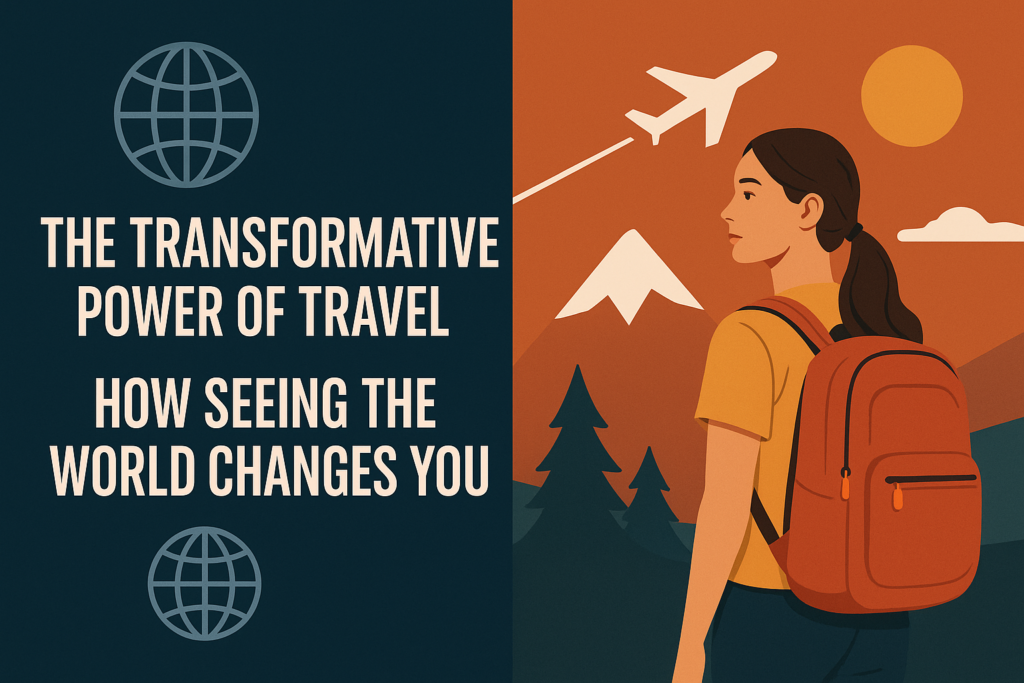
Above all, travel today embodies a powerful theme: transformation. Each journey, no matter the distance or duration, carries the potential to change us. It challenges our perspectives, encourages personal growth, and helps us reconnect with our sense of wonder and possibility. The essence of modern travel is about embracing its transformative power, viewing each experience not merely as a respite from routine, but as a stepping stone toward a more open, reflective, and connected way of living. In setting the stage for adventure, we acknowledge that the greatest journeys are those that leave a lasting imprint on our inner selves, shaping who we become long after the suitcases are unpacked.Travel serves as a powerful catalyst for broadening one’s horizons, inviting individuals to engage with cultures, traditions, and perspectives vastly different from their own. When people venture beyond the borders of their own familiar cultural norms, they often find themselves enriched by the experience of immersion in new environments. Researchers have repeatedly found that travelers tend to develop greater empathy and adaptability, as they are challenged to navigate both everyday interactions and subtle, unspoken customs in foreign settings. According to a report by the Global Commission on International Travel, over 70% of participants claimed that travel had significantly increased their understanding and respect for other cultures.
Stepping outside one’s cultural bubble is crucial in a world that is increasingly interconnected but sometimes divided by misunderstanding and stereotypes. When a traveler from the United States spends a month living with a host family in Morocco, for example, they begin to see beyond the surface-level differences and appreciate the shared values and aspirations that unite people everywhere. A simple act, such as participating in a traditional tea ceremony or attending a local festival, can open doors to unexpected friendships, challenge preconceived notions, and encourage a more nuanced understanding of the world.
Many seasoned travelers recount transformative moments when travel forced them to reevaluate their assumptions. One traveler to Japan, for instance, described how an act of kindness from a stranger during a language mishap taught them the universal power of patience and human connection despite the barrier of words. Another shared how learning to adapt to siesta hours while staying in rural Spain taught them to embrace a slower pace of life and value rest in a way they never had before. These stories reinforce the idea that immersing oneself in another culture leads to lessons as profound as they are unpredictable—lessons that remain long after suitcases are unpacked and journeys have ended. Ultimately, travel’s impact lies not just in the places visited but in the lifelong shifts it sparks in attitudes, values, and worldviews.Traveling to unfamiliar places inevitably presents a series of challenges, whether it’s getting lost on winding city streets, navigating confusing public transportation systems, or stumbling over language barriers. Far from deterring the curious traveler, these hurdles often become the catalysts for profound personal growth. Finding yourself disoriented in a foreign city, with only a phrasebook or a translation app for guidance, quickly sharpens problem-solving skills and forces you to think creatively. Each successful negotiation with a taxi driver who speaks little English, or triumphant moment when you finally reach your destination after a series of missed buses, builds a quiet resilience. Over time, these little victories breed adaptability—an essential trait that goes beyond travel and enriches all aspects of life.
Solo travel, in particular, offers a unique context for these transformative experiences. Without the reliance on companions, every obstacle must be faced head-on, whether it’s deciphering menus with unfamiliar scripts or making snap decisions in the face of missed connections. The very act of stepping onto a plane alone can be daunting, but with each new adventure, self-confidence flourishes. One traveler might recall getting hopelessly lost in the chaotic medina of Marrakech, only to eventually uncover confidence in their ability to ask for directions, navigate by intuition, and trust strangers. Another might remember the anxiety before conversing in a foreign language, soon replaced by pride after managing a simple transaction in Japanese or Spanish. These moments of self-reliance, no matter how small, accumulate and reaffirm an inner strength that stays long after the journey ends.
Travel also holds up a mirror to personal biases and fears, inviting reflection and growth. Encounters with new cultures can shatter assumptions, prompting travelers to question long-held beliefs or values. An individual wary of street food, for example, might find themselves hungrily devouring spicy noodles on a bustling Bangkok sidewalk, discovering not just delicious flavors but also a renewed openness to the unfamiliar. Interacting with people from vastly different backgrounds often challenges prejudices and encourages empathy, fostering a deeper understanding of both the world and oneself. Ultimately, overcoming the inevitable fears and missteps of travel becomes a powerful testament to human adaptability, serving as a reminder that every challenge is an opportunity for personal evolution.Travel is, at its core, about connection—a universal thread that binds people together, whether across continents or across the street. One of the most rewarding aspects of exploring new places is the opportunity to meet locals who offer windows into their everyday lives, traditions, and perspectives. Conversations exchanged in bustling markets, laughter shared over a home-cooked meal, or guidance offered by a stranger when you’re lost—these heartwarming moments of human connection often become the most cherished memories of any journey. Equally, encounters with fellow travelers can be profound. Bonding over long bus rides, navigating unfamiliar cities together, or simply chatting in hostel common rooms creates a unique camaraderie. These shared experiences break down barriers and foster trust and understanding, nurturing friendships that frequently outlast the trip itself. In fact, many travelers recount stories of friendships forged abroad that have led to future reunions, invitations to family gatherings, or even collaborative projects spanning the globe.
In recent years, the growing phenomenon of “travel tribes” and global communities has transformed the way people approach exploration. Digital technology and social platforms now enable individuals to seek out like-minded adventurers even before setting foot in a new destination. Whether it’s a group of digital nomads gathering in Bali, culinary enthusiasts embarking on gastronomic tours of Europe, or sustainable travelers volunteering on eco-projects, these tribes offer a sense of belonging and support. They empower individuals to navigate unfamiliar environments with confidence, exchange insider tips, and celebrate each other’s cultures. This rise of interconnected global communities not only makes the world feel smaller and more accessible but also encourages values of empathy, curiosity, and open-mindedness. In this sense, travel is no longer just about seeing new sights but about weaving yourself into a vast tapestry of relationships—each connection, however fleeting, enriching your understanding of humanity and leaving a lasting imprint on your life.Travel is much more than just a physical journey; it is an ongoing interplay between memory, meaning, and mindfulness that continually shapes our inner lives. One of the most powerful ways to capture and make sense of our experiences is through reflection. Practices like journaling, photography, and storytelling allow us to immortalize fleeting moments that might otherwise be quickly forgotten. Writing in a travel journal, for example, invites us to dig deeper into our observations and emotions. It becomes a record not only of places visited, but of inner transformations—a dialogue with ourselves that fosters self-awareness and growth. Photography, too, is an act of mindful attention; by framing an image, we force ourselves to slow down, notice details, and appreciate the beauty or strangeness all around us. Meanwhile, sharing travel stories—whether with loved ones or a wider audience—gives our memories coherence and meaning, allowing us to connect with others through the universal language of adventure and discovery.
Being mindful while traveling goes hand-in-hand with these reflective practices. Newness and novelty naturally encourage us to be present, as unfamiliar sights, sounds, and smells draw our attention to the here and now. Stepping outside our routines disrupts autopilot mode, making even simple moments feel vibrant and alive. This sense of presence is at the heart of mindfulness, which has been shown to reduce stress and enhance emotional well-being. In foreign settings, our senses are heightened, and daily worries often fall away as we immerse ourselves in the moment—whether that means sipping tea in a crowded market or standing silent before a breathtaking landscape.
Over the long term, these mindful and reflective approaches to travel can provide lasting benefits for our mental health and creativity. Journaling and storytelling help us process challenging experiences, fostering resilience and deeper self-understanding. The act of remembering and interpreting our journeys can generate fresh insights, and the rich tapestry of memories collected over time becomes a wellspring of creative inspiration. Ultimately, travel invites us to be both present and reflective—cultivating a practice of mindfulness that can enrich not only our explorations, but also the way we live our daily lives once we return home.As the world becomes increasingly aware of the environmental and ethical impacts of tourism, responsible and sustainable travel has emerged as a powerful movement that goes beyond simply exploring new destinations. Today’s travelers are more conscious than ever about their carbon footprint, the preservation of natural habitats, and the welfare of local communities. They strive to minimize harm and maximize the positive effects of their journeys. This shift is fueled by a combination of growing global awareness, educational initiatives, and firsthand accounts demonstrating the profound difference mindful travel can make.
Practicing responsible tourism starts with thoughtful planning. Opt for eco-friendly accommodations that reduce water and energy consumption, or choose tour operators committed to sustainable practices and fair labor conditions. Instead of single-use plastics, travelers can pack reusable water bottles and tote bags to cut down on waste. Supporting local economies is another key aspect: dining at locally owned restaurants, purchasing handicrafts directly from artisans, and employing local guides ensures that tourism dollars remain in the community, fostering development and cultural preservation. Moreover, respecting local customs, traditions, and dress codes deepens the travel experience while honoring the host culture.
Travelers are increasingly finding creative ways to give back, turning vacations into opportunities for meaningful exchange. Some join conservation projects, plant trees, or volunteer in community initiatives, leaving a tangible positive impact behind. For instance, a group of friends trekking through Nepal signed up to help rebuild a village school, forging lasting relationships while contributing to post-earthquake recovery. In Costa Rica, visitors participate in sea turtle conservation programs, protecting endangered species and learning about marine ecosystems in the process. These efforts are more than fleeting acts—they inspire others to travel consciously and recognize their potential as agents of change.
Ultimately, responsible and sustainable travel is about making choices that reflect care—for the environment, for people, and for the world’s rich diversity. By embracing these values, travelers don’t just take home memories and souvenirs—they become part of a global movement, shaping tourism as a force for good and pioneering a future where discovery and stewardship go hand in hand.Travel is more than a way to see new places; it’s a powerful vehicle for personal growth and transformation. Throughout our exploration, we’ve uncovered how stepping beyond our comfort zones—whether wandering foreign streets or discovering hidden gems close to home—broadens our perspectives and challenges assumptions. Every trip, regardless of distance, invites us to learn, adapt, and connect with people and cultures different from our own. In doing so, travel nurtures empathy, resilience, and an appreciation for the diverse tapestry of humanity.
Often, the most profound insights come from simply being open to new experiences. Even small adventures can ignite curiosity and spark unexpected joy. You don’t need a passport or a plane ticket to cultivate a traveler’s mindset; sometimes, wonder awaits in a neighboring park, a local museum, or a trail just beyond the city limits. It’s about embracing the journey itself—the moments of awe, the tiny surprises, the friendships forged, and the stories collected along the way. Each journey, big or small, holds the potential to shift our outlook and inspire personal discovery.
So, I encourage you to seek your own adventure—whatever that looks like. Set aside time to explore, even if it means simply walking a new route in your hometown. Talk to someone from a different background or try a cuisine you’ve never tasted. Keep your mind open and your senses awake to the richness around you. Let curiosity guide your steps. Remember that travel isn’t always about the destination; it’s about the transformation that happens en route.
Now is the perfect moment to plan your next journey, whether across the globe or just around the corner. Let anticipation fuel your imagination and excitement shape your plans. Start small if you need to, but start somewhere. The world is vast and endlessly fascinating, always waiting to be explored. With an open heart and a spirit of adventure, every journey will teach you something new and remind you of the beauty of connection. The world awaits—embrace it, and let it change you for the better.