
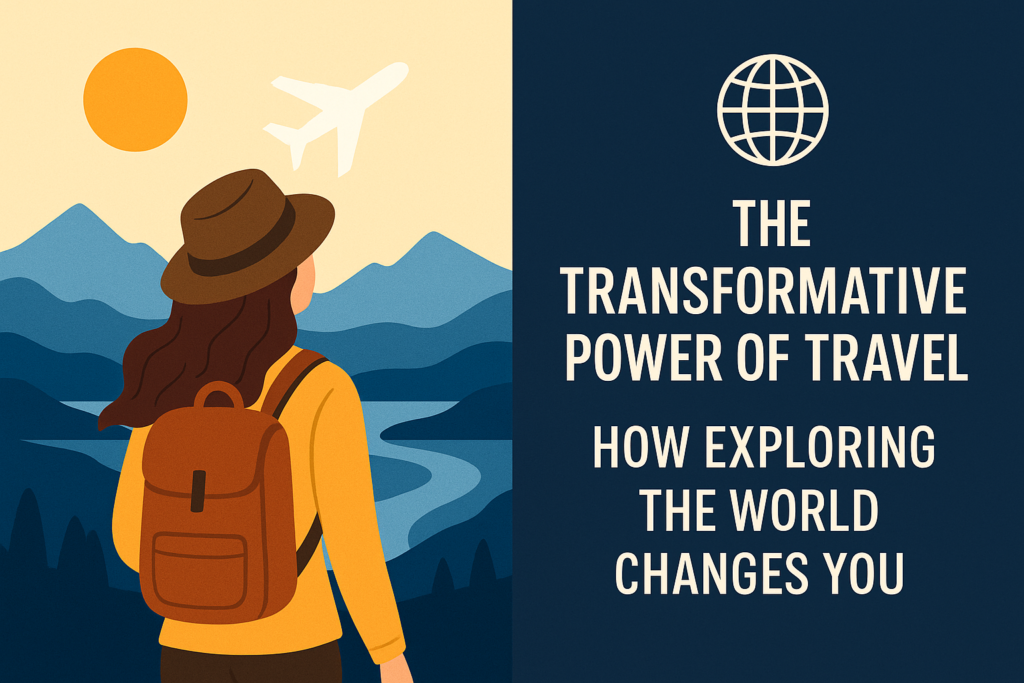
The soft glow of dawn spills through your window as you slowly awaken, disoriented but exhilarated. Instead of familiar chatter or traffic outside, you hear the lyrical rise and fall of a foreign language and the distant melody of street musicians. The air itself seems changed, carrying spices and fresh bread from a market you’ve yet to visit. With every breath, there’s a tingle of anticipation—the unknown waiting just beyond your door. As you step out into winding streets and colors you’ve never seen before, everything feels heightened: the sound of your footsteps on cobblestones, the flavor of a strange fruit bursting on your tongue, the laughter of strangers who might soon become friends.
Pause for a moment: when was the last time you truly stepped outside your comfort zone? Can you recall the last occasion you willingly surrendered routine for uncertainty, trading predictability for surprise? Travel gives us that rare opportunity to dismantle the walls we’ve carefully constructed around our daily lives, exposing us not only to new cultures and experiences, but also to new versions of ourselves. There’s something transformative about navigating unfamiliar territory, deciphering menus you can barely read, or making yourself understood through halting gestures and shared smiles. Each small victory—the successful negotiation of a fare, the discovery of an out-of-the-way café, the understanding exchanged between strangers—reshapes how you see yourself and the world. In pushing past the boundaries of the known, travel invites us to rediscover wonder, humility, and adaptability.
As you savor those first few moments in a place that is not yet home, you sense subtle but significant changes stirring within. Travel is more than just a journey from one location to another—it is a catalyst for personal evolution, a gentle (or sometimes jarring) invitation to grow, adapt, and see the world, and yourself, through new eyes. With every footprint left on unfamiliar ground, you draw closer to discovering not just a new place, but a deeper sense of possibility within yourself.In today’s rapidly evolving, interconnected world, the concept of travel has transcended its traditional boundaries. No longer is it merely about visiting famous landmarks or ticking destinations off a bucket list. Travel now encompasses a richer, more nuanced spectrum of experiences, inviting individuals to explore not just the physical attributes of a place, but the stories, cultures, and communities that shape it. The rise of solo adventurers who set out to discover themselves as much as the world around them is a testament to this shift. Likewise, eco-tourism has emerged as a vital trend, with travelers increasingly seeking meaningful ways to engage with nature responsibly and leave a positive impact on the environments they visit. Cultural immersion, too, is becoming a central focus, as more people strive to genuinely understand local customs, traditions, and ways of life rather than simply observing them from afar.
The growing popularity of these diverse forms of travel reveals a collective desire to connect on a deeper level—both with places and with people. It signals a move away from passive consumption toward active participation in the world’s ongoing story. Social media may play a role in inspiring wanderlust, yet it is ultimately the authentic experiences and newfound perspectives gained through travel that leave a lasting imprint. Travelers routinely return home changed: their worldviews broadened, biases challenged, and curiosity reignited.
At the heart of this exploration lies the transformative power of travel. Whether journeying to remote villages, bustling metropolises, or pristine natural reserves, the act of stepping beyond familiar borders has the capacity to profoundly alter the way we perceive ourselves and the world. More than a leisure activity, travel functions as a catalyst for personal growth and mutual understanding. It fosters empathy by allowing us to walk in someone else’s shoes—even if only briefly—and encourages a spirit of openness that can ripple outward, benefiting not just individual travelers but the communities they encounter. This article delves into how travel, in its many modern forms, is not only reshaping lives but also helping to build stronger, more connected communities worldwide.Travel is a powerful catalyst for broadening perspectives and challenging long-held prejudices. Numerous studies have shown that exposure to different cultures significantly reduces biases and fosters greater empathy. For example, research published in the Journal of Personality and Social Psychology found that individuals who spent meaningful time in countries with cultures quite different from their own demonstrated increased tolerance and understanding toward members of other groups. Even brief interactions, such as participating in a local festival or sharing a meal with a family abroad, can chip away at preconceived notions and replace them with personal experience. Anecdotes abound of travelers who discover common humanity across language and cultural barriers—whether it’s an American visitor discovering unexpected warmth during a homestay in rural Morocco, or a Japanese student realizing shared dreams and frustrations while volunteering in Brazil. These encounters provide a tangible reminder that, despite external differences, people around the world grapple with similar joys, challenges, and aspirations.
Psychologically, being immersed in an unfamiliar environment compels individuals to confront and reassess their own assumptions. The daily routines, social norms, and belief systems that once seemed universal are revealed as products of a particular place and history. Witnessing the communal focus of Balinese culture, the resilience of Icelandic society in the face of adversity, or the spiritual devotion found in Indian rituals offers a direct experience of alternative worldviews. Such firsthand observation often leads visitors to question stereotypes they might unconsciously harbor—such as ideas about hospitality, work ethics, or gender roles. These moments of cognitive dissonance are not always comfortable, but they are crucial for growth. They open the door to more nuanced thinking and deeper compassion, replacing judgment with understanding.
Over time, travel becomes an ongoing exercise in debunking misconceptions. Meeting individuals whose lives contradict media-driven narratives or national stereotypes helps dismantle the mental walls that divide “us” from “them.” It becomes harder to generalize or dismiss entire groups after sharing laughter, stories, and struggles. Ultimately, by stepping outside one’s comfort zone and engaging with difference, travelers nurture the kind of empathy and open-mindedness that can ripple outward, challenging prejudice not just in themselves, but in their communities back home.Travel serves as a powerful catalyst for personal growth and the development of confidence, challenging individuals in ways that everyday life often does not. Navigating unfamiliar environments compels travelers to rely on their instincts and problem-solving skills, fostering a sense of self-reliance that can be both humbling and empowering. Simple acts, like finding one’s way through the maze-like streets of an ancient city or figuring out public transportation in a country where the language is unfamiliar, push travelers out of their comfort zones. Each successful challenge, no matter how small, strengthens confidence and reinforces the belief in one’s ability to adapt and thrive.
Far beyond exploration and sightseeing, travel becomes an immersive learning experience. New situations demand creative solutions, whether it’s handling a missed train, deciphering a foreign menu, or negotiating prices in a bustling market. These moments of unpredictability encourage travelers to develop practical problem-solving skills and think on their feet. Learning to communicate in a new language, even with just a handful of phrases and gestures, goes hand in hand with this growth. Travelers quickly learn that cross-cultural communication is as much about empathy and patience as it is about vocabulary, and each successful interaction paves the way for greater self-assurance.
Perhaps most significantly, being exposed to the unexpected requires a profound level of adaptability. Plans may change suddenly, and travel itineraries might need to be rewritten on the fly. These experiences cultivate flexibility and resilience, vital life skills that extend beyond the journey and into personal and professional realms.
Seasoned travelers often reflect on how the road shaped them in lasting ways. As Lara W., an avid solo traveler, notes, “I learned more about myself navigating a crowded Bangkok street market than I ever did in a classroom—making decisions, dealing with setbacks, and connecting with strangers helped me build a confidence I carry everywhere.” Similarly, travel blogger Tom R. shares, “After getting lost hiking in Patagonia and finding my way back, I realized I had strengths I’d never tapped into before.” These insights highlight how each journey, with its unique challenges, offers invaluable lessons and a deeper sense of trust in one’s own capabilities. Through travel, self-discovery is not just a possibility—it becomes an ongoing adventure.Travel goes far beyond sightseeing—at its heart, it is about forging genuine connections and discovering common ground across cultures. Cross-cultural friendships, often sparked by chance meetings in hostels, market stalls, or bus rides, enrich our journeys in profound ways. When travelers open themselves to authentic interactions, language barriers fade and curiosity overcomes cultural divides. Sharing a meal with a local family, learning a traditional craft from an artisan, or accepting a neighbor’s invitation to a festival often leaves a deeper impression than any landmark ever could.
Countless travelers return home with stories of serendipitous friendships: the Australian who learned salsa from Colombian roommates in Medellín, the American who volunteered at a school in rural Cambodia and remained pen pals with the teachers, or the German backpacker who built a lifelong bond with a Bedouin guide in the Jordanian desert. These genuine exchanges not only shatter stereotypes but also expand our sense of belonging to a wider, global community. By connecting on a human level, we see firsthand the shared joys, struggles, and aspirations that unite people everywhere.
Building these bridges is not only about friendship, but also about respect and responsibility. Local experiences—be it joining a community gardening project or shopping at neighborhood markets—involve travelers in daily life and foster mutual understanding. Volunteering abroad, when approached ethically and in partnership with local organizations, allows visitors to contribute meaningfully while learning from the community they serve. Responsible tourism, with its emphasis on respecting local customs and supporting small businesses, empowers travelers to give back and promote positive impact.
Ultimately, these cross-cultural connections transform the traveler as much as the journey itself. Friendships made on the road nurture empathy and a deeper appreciation for diversity, inspiring us to carry the spirit of global community long after the trip ends. By engaging thoughtfully and respectfully, every traveler plays a part in bridging distances—making the world feel a bit smaller, and infinitely richer.Exploration is a journey defined as much by its trials as by its triumphs. While the thrill of setting foot in new places ignites excitement, the realities of travel often bring both joy and struggle in equal measure. Culture shock is a common companion, presenting unfamiliar customs, languages, and ways of life that can feel overwhelming at first. Simple routines—ordering a meal, navigating city streets, or even greeting locals—transform into exhilarating yet sometimes intimidating challenges. Homesickness, too, makes its appearance unannounced, tugging at the heart when surrounded by foreign sights and sounds. Yet, within these very struggles lies an unparalleled sense of joy; the delight found in spontaneous discoveries and unplanned adventures often remains etched in memory long after the journey ends.
Navigating these challenges is an integral part of the traveler’s experience. Embracing openness to local customs and showing patience with oneself eases cultural adaptation. Learning a few basic phrases in the local language not only helps with daily interactions but also fosters connection with people met along the way. Smart budgeting alleviates many financial worries—planning ahead for major expenses, keeping a daily spending log, and allowing room for occasional splurges contribute to a more stress-free adventure. Prioritizing safety is equally vital: researching neighborhoods before arrival, keeping valuables secure, and trusting your instincts in unfamiliar situations can make a significant difference. When loneliness or doubt arises, finding community—whether with fellow travelers or locals—offers valuable comfort and perspective.
Reflecting on the journey, it becomes clear that hardships often enrich travel in ways that smooth sailing cannot. The frustration of getting lost eventually turns into a funny story; the challenge of adjusting to a different culture brings a deeper appreciation for both the new and the familiar. Each obstacle overcome builds resilience and confidence, weaving adversity into the fabric of cherished memories. There is beauty in the unpredictability, in moments of vulnerability that spark growth, empathy, and self-discovery. Ultimately, it is not only the destinations that shape us, but the journey—with all its ups and downs—that makes the experience profoundly rewarding.Travel has a unique and lasting influence that extends far beyond the memories of new places and faces; it has a powerful ability to reshape career trajectories, ignite passions, and redefine life’s priorities. Many people find that stepping into unfamiliar environments challenges their assumptions and exposes them to new ideas, sparking unexpected interests or aspirations. For example, some professionals return home after spending time abroad only to realize they are compelled to switch industries or pursue further education, inspired by the innovation or social issues they witnessed. Others have transformed fleeting moments into lifelong vocations—a chef who discovered a love for regional cuisine while backpacking through Southeast Asia might open a fusion restaurant in their hometown, while a corporate worker inspired by sustainable lifestyles in Scandinavia could launch an eco-friendly startup.
Countless stories illustrate how travel becomes the catalyst for radical transformation. Entrepreneurs like Blake Mycoskie, who founded TOMS Shoes after witnessing children in Argentina without proper footwear, or authors who embark on a year abroad to fuel their creativity, are powerful reminders of travel’s impact. For some, a volunteer stint in a remote community becomes the seed for a nonprofit dedicated to global health or education. Others relocate permanently, captivated by a place that resonates deeply with their values and ambitions, or integrate cultural practices and philosophies into their everyday lives.
This ripple effect often extends far beyond the individual, influencing families, social circles, and even communities. Returning travelers can inspire those around them to rethink what is possible, share skills they’ve acquired, or introduce innovative solutions to local challenges. The awareness gained abroad—whether about environmental sustainability, social justice, or entrepreneurship—often finds its way home, leading to initiatives that benefit the wider community. From supporting fair-trade products to organizing cultural festivals or advocacy campaigns, the impact of travel reverberates in countless, often intangible, ways. Ultimately, travel has the profound potential to serve as both a mirror and a catalyst, helping individuals and societies evolve by fostering empathy, curiosity, and the courage to pursue change.Throughout our exploration, it’s clear that travel is far more than just a means of escaping the routines of daily life; it is a powerful catalyst for personal transformation. Each destination visited, culture encountered, and challenge faced adds new dimensions to who we are. Travel opens our eyes to different perspectives, teaching us empathy as we engage with people from diverse backgrounds. It breaks down our preconceived notions and nurtures adaptability, resilience, and open-mindedness. Experiences outside familiar surroundings encourage growth in ways routine comfort simply cannot replicate. We learn to be resourceful when plans change, patient as we navigate linguistic and cultural barriers, and confident as we chart unknown territories. The knowledge gained from immersing ourselves in new traditions and environments can reshape values, fuel creativity, and spark an enduring sense of curiosity.
Reflecting on these profound impacts, it becomes evident that travel holds possibilities far beyond leisure or adventure; it is an ongoing journey of self-discovery and transformation. Consider the trips you’ve long dreamt of taking—the places calling to your sense of wonder or adventure. What hidden strengths, passions, or new perspectives might you uncover by stepping outside your comfort zone? Each journey, whether across continents or local landscapes, carries the potential to expand your horizons and redefine your sense of self.
Now is the time to act on those dreams. The world is brimming with lessons, experiences, and friendships waiting just beyond your thresholds. Don’t let hesitation or routine hold you back—embrace the opportunities that travel offers to broaden your understanding, enrich your spirit, and inspire growth. Take that leap, buy that ticket, and set out on the journey you’ve always pondered. By opening yourself to the world’s lessons, you invite transformation, adventure, and a more profound connection with both yourself and the global community. The first step may seem daunting, but it could lead you to the most rewarding chapters of your life—what are you waiting for?